

In response to a recent Nipah virus outbreak in India, Thailand has significantly increased health surveillance at its major airports.
As of now, health officials have screened around 1,700 incoming travelers, with no cases of the virus detected so far, per The Independent.
The Ministry of Public Health has focused its screening efforts on travelers arriving from West Bengal, the epicenter of the outbreak in India.
Passengers primarily enter Thailand through Suvarnabhumi, Don Mueang, and Phuket airports. Thailand's proactive health measures follow reports of a new cluster of infections in Kolkata, West Bengal's capital.
Nipah Virus Outbreak in India
The Indian government reported a cluster of Nipah virus cases in Kolkata last week, with the Ministry of Health confirming two cases in the state since December.
Both individuals were healthcare workers. The health ministry also noted that 196 people who had been in contact with the infected workers tested negative for the virus.
In light of the outbreak, Thailand's public health minister, Phatthana Phromphat, stated that the enhanced screening measures were implemented following instructions from Prime Minister Anutin Charnvirakul.
Teams began screening travelers late last week at the country’s main airports.

Health Officials Confident in Measures
Public health officials have expressed confidence that the enhanced screening measures are sufficient to prevent the virus from spreading within the country.
Approximately 700 travelers from Kolkata arrive in Thailand each day, and health experts believe the risk of an outbreak remains low.
Minister Phatthana emphasized the collaboration between his office, Deputy Prime Minister and Transport Minister Phiphat Ratchakitprakarn, and airport operators to ensure the thoroughness of the screening process.
"If there’s a suspected case at an airport, the person will be quarantined and the results of a relevant test will be known in eight hours," he said.
Low Risk of In-Flight Transmission
The Minister reassured the public, stating that the risk of transmission between passengers on the same flight is very low.
Unlike COVID-19, which can be spread by asymptomatic individuals, the Nipah virus does not transmit unless the infected person is showing symptoms.
"For Nipah, infected people will not transmit it as long as they do not have any symptoms," he added.
Thailand has not reported any cases of the Nipah virus to date.
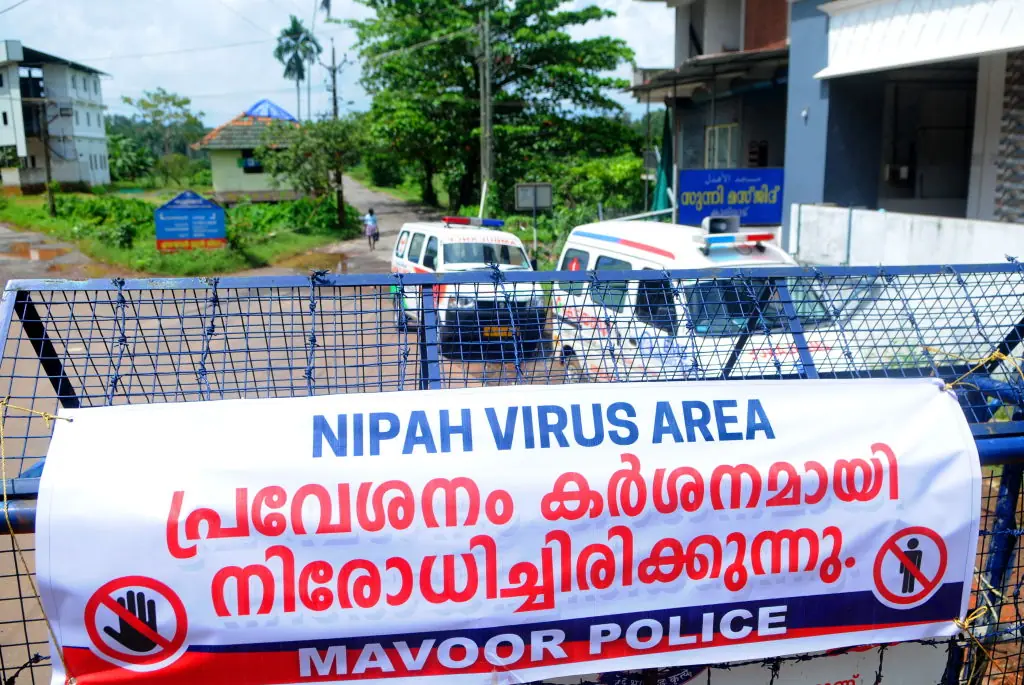
Background on Nipah Virus
The Nipah virus was first identified in Southeast Asia during outbreaks in Malaysia and Singapore in 1998 and 1999.
These early cases were linked to pig farm workers and individuals in close contact with livestock. More recent outbreaks have been reported in India and Bangladesh, often associated with the consumption of raw date palm sap contaminated by fruit bats, the virus’s natural host.
There has been some public concern in Thailand regarding the presence of flying foxes, known carriers of the Nipah virus, particularly sightings in Phra Nakhon Si Ayutthaya.
Thai authorities quickly addressed these concerns, stating that there was no evidence to link these bats to any Nipah infections in the country.
Regional Health Responses to the Outbreak
Other countries in the region have also taken steps to mitigate the spread of Nipah. Health experts in Hong Kong have advised against travel to West Bengal due to the ongoing outbreak.
Vishal Melwani, vice president of the India Association Hong Kong, commented: “There is a large and thriving Bengali community in Hong Kong. Those who are planning trips might postpone them until they see what the situation is.”
Hong Kong authorities have classified Nipah as one of 53 notifiable infectious diseases, meaning it is subject to close monitoring. Despite the concerns, there has been no cause for widespread panic in the region, with officials urging caution.