
World3 min(s) read
Satanic priest who 'sold his soul to the devil' becomes the newest saint in the Catholic Church
More than 700,000 people gathered in St. Peter’s Square in Rome this month to witness a stunning transformation come full circle.
The canonization of Bartolo Longo, a former Satanic priest who devoted the latter part of his life to serving the Catholic Church, per the Daily Mail.
Pope Leo XIV led the canonization ceremony, officially declaring Longo and six others as new saints in the Catholic faith.
From Occult Rituals to Redemption
Bartolo Longo’s story begins in 1841 in Latiano, Italy, where he was born and later trained to become a lawyer.
But after the death of his father, Longo’s life took a dark turn.
He became involved in occult practices, eventually rising to the role of a Satanic priest.
During this time, he reportedly engaged in extreme fasting, drug use, séances, orgies, and is said to have made a pact with a demon.
His downward spiral was interrupted by a haunting experience — a voice, which he believed to be his late father’s, calling out to him: “Return to God!”
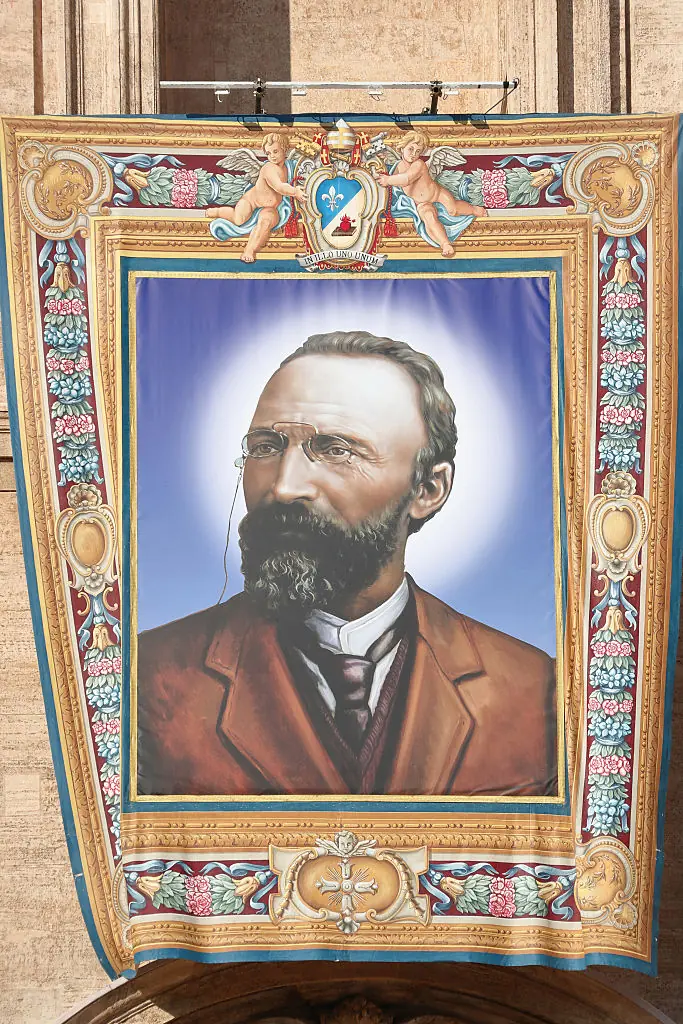
Bartolo Longo is the latest Saint. Credit: Mondadori Portfolio / Getty
Disturbed and desperate, Longo confided in his friend, Professor Vincenzo Pepe. Upon hearing about Longo’s involvement in Satanism, Pepe warned him that he was heading toward “madness and spiritual ruin.”
His words cut through Longo’s denial, leading him to seek guidance from Father Alberto Radente, a Dominican priest.
Under Radente’s direction, Longo underwent a month-long confession and spiritual rehabilitation. He eventually renounced the occult entirely and began speaking out against spiritualism, even disrupting public gatherings and cafés to warn others.
“I Renounce Spiritualism”
After six years of charitable work, Longo took vows as a lay Dominican on the Feast of Our Lady of the Rosary. He later attended one final séance — not to participate, but to confront his past.
Raising a rosary before the group, he declared: “I renounce spiritualism; it is nothing but a web of lies and deception.”
His dramatic exit from the occult marked the start of a new life devoted to service and faith.
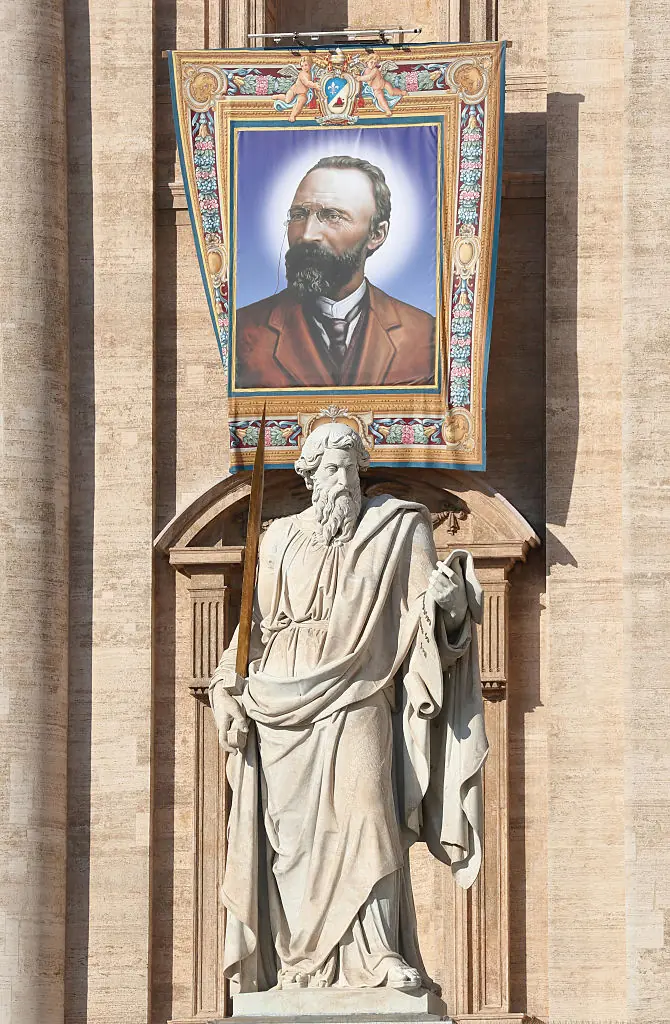
Bartolo returned to god after allegedly making a pact with a demon. Credit: Mondadori Portfolio / Getty
Founder of the Pompeii Shrine and Advocate for the Marginalized
Longo’s transformation was not just spiritual — it became deeply humanitarian. He founded the Pontifical Shrine of the Blessed Virgin of the Rosary of Pompeii, a major pilgrimage site in Italy.
In 1887, he opened an orphanage for girls. Five years later, in 1892, he established an institute for the sons of prisoners, followed by another for daughters of prisoners in 1922.
He also volunteered at the Neapolitan Hospital for Incurables for two years.
Bartolo Longo died in 1926. His legacy lives on through his religious contributions and tireless social work — a life that led to him being recognized as a symbol of redemption and faith.
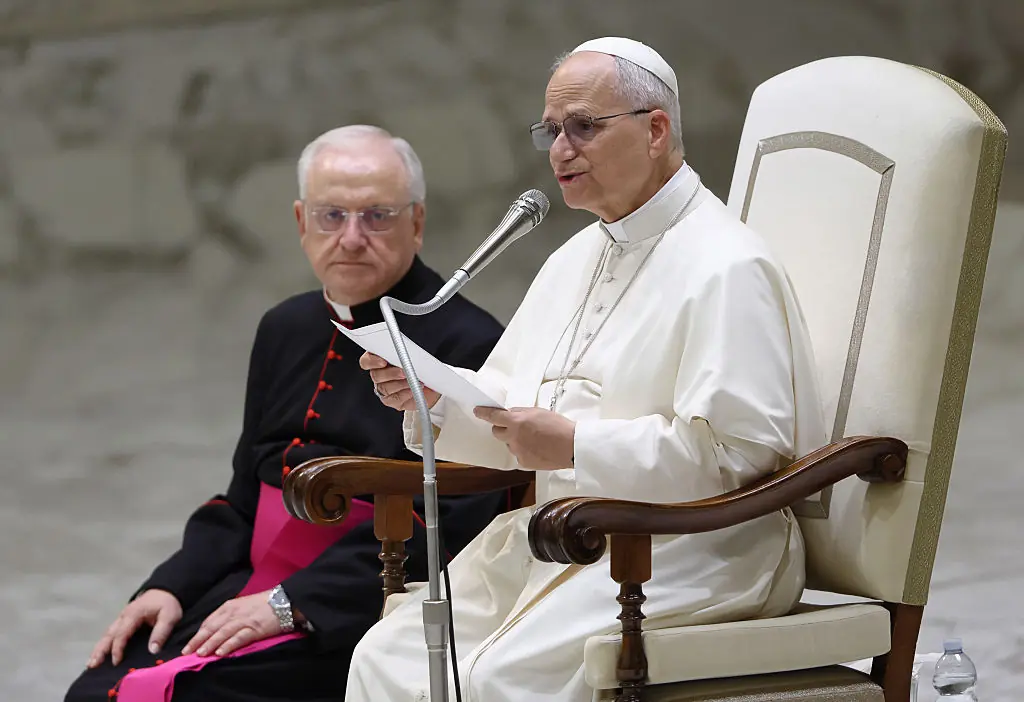
Pope Leo canonized Saint Bartolo. Credit: Mondadori Portfolio / Getty
Canonized with Six Other Saints
Longo’s canonization was part of a larger ceremony in which six other individuals were also declared saints.
Among them were three nuns, a Venezuelan physician known as the “doctor of the poor,” and an archbishop who was killed during the Armenian genocide.
“Today we have before us seven witnesses, the new Saints, who, with God's grace, kept the lamp of faith burning,” Pope Leo said on October 19. “May their intercession assist us in our trials and their example inspire us in our shared vocation to holiness.”