
Weird4 min(s) read
Man who didn't masturbate for a whole year reveals surprising changes he noticed as simulation reveals what happens to sperm that isn't ejaculated

Most people joke about how long they'd last in a dry spell - whether that's unintended or taking part in something like “No Nut November,” but few actually stick with it, and perhaps that’s for the best, given the concerns experts sometimes raise.
But YouTuber Pierre Dalati took things further, committing to a full year of abstinence from masturbation, and shared the surprising changes he experienced.
Dalati’s approach, commonly known as “No Fap,” usually refers to abstaining from pornography while also limiting masturbation. In his case, he decided to give up masturbation entirely.
He explained that it’s not the act itself that’s inherently harmful, but the excessive consumption of porn, which can create an “unrealistic approach” to sexual behavior.

The benefits he noticed
In his now-viral video (which received a whopping 2.2 million views) Dalati reported several positive effects after committing to a year without masturbation:
- Improved focus: “I did notice a benefit of increased focus. Instead of constantly being distracted and having it on my mind, I could put my full attention into work, working out, or whatever I was doing in the moment.”
- Boosted confidence: He felt more like himself and said his approach to situations became “much more realistic” because he avoided daily extreme dopamine rushes.
- Increased energy and productivity: Without masturbating every day, Dalati felt he had more energy to tackle daily tasks.
- Mental clarity: With sexual urges no longer dominating his thoughts, he experienced a calmer, more organized mindset.
He admitted the first two weeks were the most difficult, as he experienced constant urges and a “drive through the roof.” But once he passed that stage, the benefits became noticeable.
Moderation is key
Despite the positive changes, Dalati stressed that he doesn’t believe masturbation is inherently bad if done in moderation. He suggests listening to your body and only engaging when there’s a natural urge rather than making it a daily habit.
He also noted he didn’t measure his testosterone levels but speculated they might have increased due to his heightened focus and strength in workouts.
A new perspective
Dalati concluded that abstaining from masturbation offered a “good experience” and provided a new outlook on daily life. With increased energy, mental clarity, and productivity, he found he could accomplish more each day.
“I think it’s definitely a good experience for everyone,” he said. “It gives you a new perspective on a day-to-day basis, and the benefits really show in how much more you can do in your day.”
It comes (no pun intended) as a graphic simulation revealed what actually happens to sperm that doesn't get ejaculated.
Men start producing sperm shortly after they reach double figures in age and continue doing so for the rest of their lives. In fact, millions of sperm cells are produced in the testicles every day.
According to Clear Blue, this all starts inside the testicles within a network of tiny tubes called the seminiferous tubules, which house germ cells.
Under the influence of hormones such as testosterone, these germ cells transform into sperm. As they grow, the cells divide and slowly take on the “tadpole” shape that most people associate with sperm.
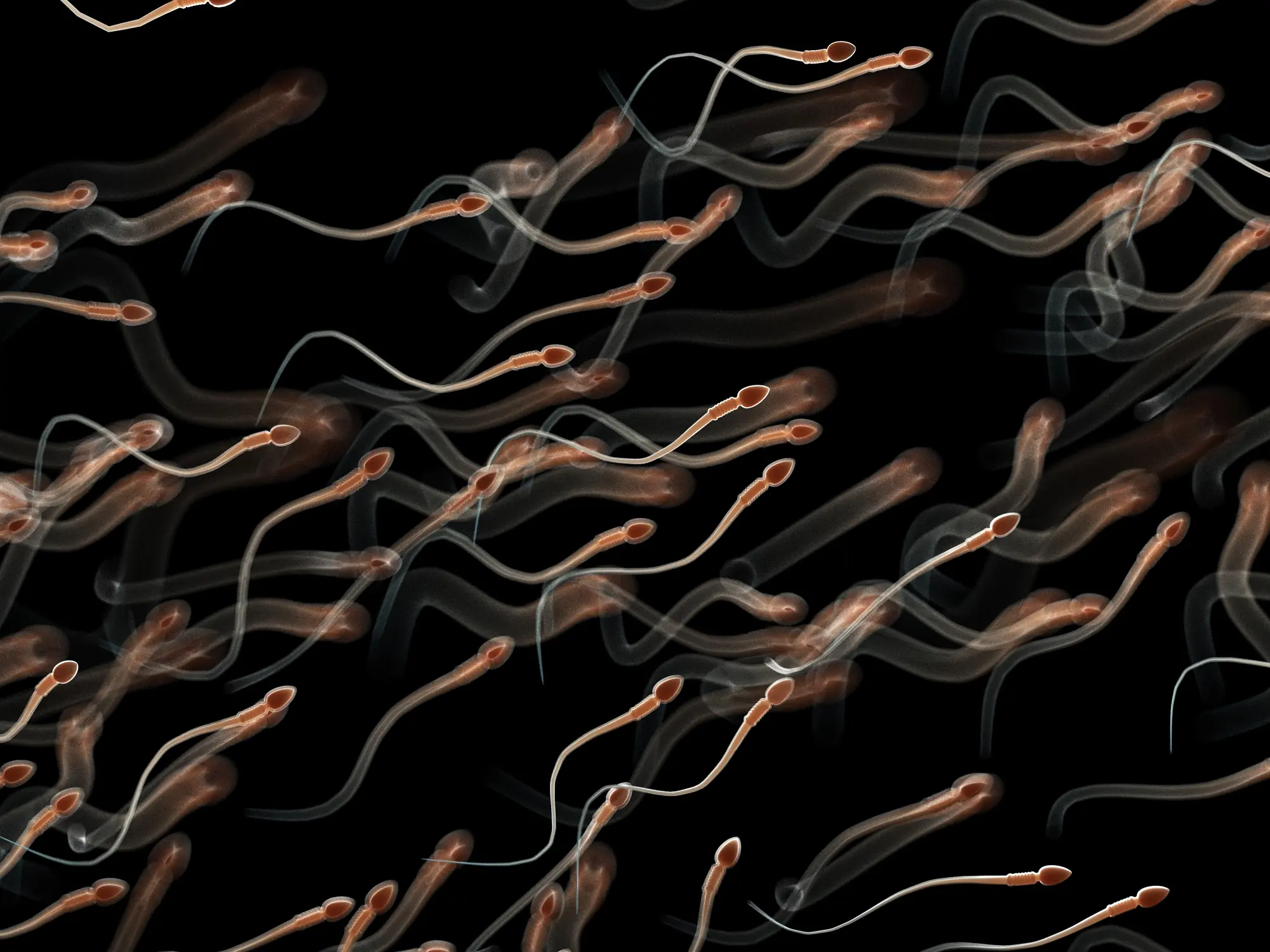
The full journey from germ cell to fully mature sperm cell capable of fertilising an egg takes around 2.5 months.
While that may sound like a long process, the male body is constantly producing sperm, meaning a healthy male will not run out, even if he ejaculates several times a day.
A simulation on the YouTube account Dr. Smurf claims to show how the body handles the situation.
The epididymis, the tube connected to the testicles, has a lining that breaks down old sperm cells.
The protein and nutrients from dead sperm are reabsorbed and repurposed to create other cells in the body, including new sperm cells.
In other words, the body runs a recycling system: Old sperm is broken down, its structural components, including enzymes, zinc, and fructose, are reclaimed, and the materials are reused.
Depending on where it is, sperm can stay alive for differing amounts of time. If it isn’t reabsorbed into the body, it can be released via a nocturnal emission, commonly known as a wet dream, according to Medical News Today.
Heathline notes that there do not appear to be any risks associated with not releasing sperm via ejaculation.
However, research has explored a potential link between ejaculation frequency and prostate cancer.
Many factors can contribute to cancer risk, but a Harvard study discovered that among men who ejaculated most each month, their risk of prostate cancer was 31 percent lower.