
US3 min(s) read
Criteria you must meet to be eligible as Trump reveals date $2,000 cheques could go out - he's promised to give the money to almost everyone in America

Donald Trump has announced plans to give $2,000 to nearly every American, framing the payments as a “dividend” fueled by revenue from his tariff policies.
The president shared the proposal on Truth Social earlier this month, emphasizing that tariffs have strengthened the U.S. economy and contributed to what he calls the nation’s unprecedented wealth.
Trump argued that the country is now the “richest, most respected country in the world” thanks to his policies.
In his posts, Trump celebrated strong stock market performance, record 401(k) balances, and the government’s growing revenue stream, while labeling critics of tariffs as “FOOLS.”
He highlighted the trillions of dollars coming into federal coffers, hinting that the funds could also be used to begin paying down the national debt, which currently exceeds $38 trillion.
How to Become Eligible for the $2,000 “Dividend”
Treasury Secretary Scott Bessent has clarified that the proposed payments could be tied to household income.
Speaking to Fox & Friends, Bessent suggested that families earning less than $100,000 annually might qualify for the $2,000 rebate.
While no official income threshold has been finalized, he confirmed the proposal is still under discussion.
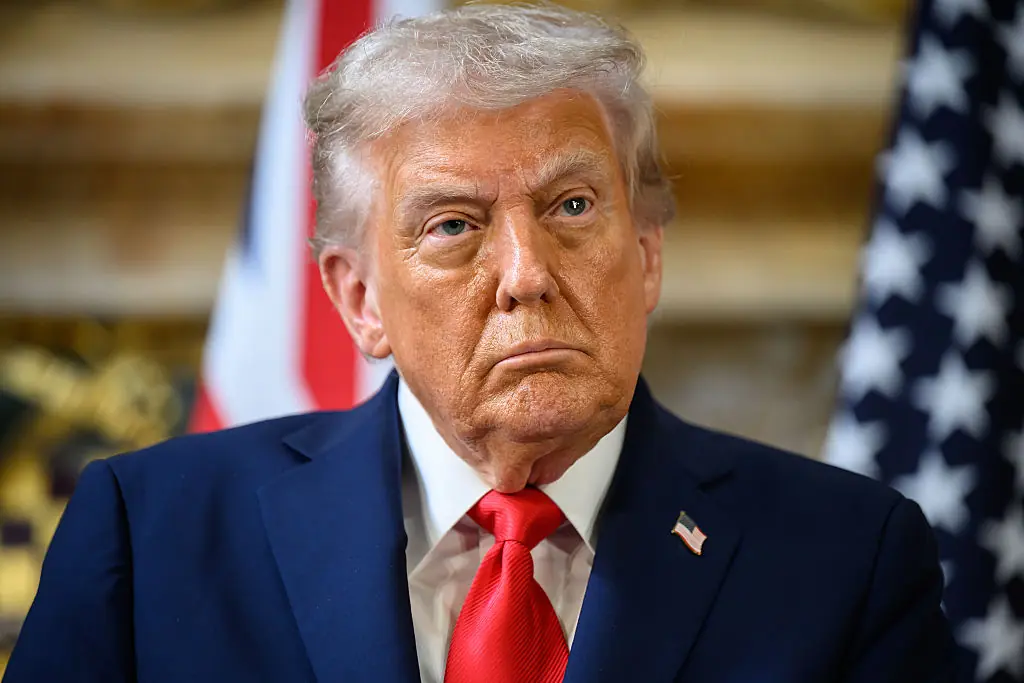
Credit: Leon Neal / Getty Images.
If the $100,000 limit is adopted, approximately 150 million Americans could benefit – significantly more than previous Trump-era stimulus programs, which capped eligibility at $75,000 for individuals and $150,000 for married couples.
Tax Foundation economist Erica York estimates that such a plan could cost roughly $300 billion, representing one of the largest direct distributions to American households in U.S. history.
Checks or Tax Relief? The Format Is Unclear
Bessent has also indicated that the $2,000 may not arrive as a traditional check.
Speaking to ABC, he suggested that the payout could take multiple forms, including tax reductions already in motion under Trump’s economic agenda.
These include eliminating taxes on tips, overtime, Social Security benefits, and making auto loan interest deductible.
According to Bessent, these measures are already putting more money into Americans’ pockets and could count toward the promised “dividend.”
White House Press Secretary Karoline Leavitt reiterated that Trump is “committed” to delivering the $2,000 payments in some form, adding that his team of economic advisers is working to finalize the details.
According to Forbes, Trump told reporters last week aboard Air Force One the $2,000 payments would come “sometime next year, during the year,” adding, “we’ve taken in a lot of money from tariffs.
The tariffs allow us to give a dividend."
How the Payments Might Be Funded
A major question remains: how will the administration pay for such a massive program?
As of late September, U.S. tariff revenue stood at $195 billion – far below the amount required to fund payments to millions of households.
The Treasury projects $3 trillion in tariff revenue over the next decade, but relying on future income could increase the already enormous national debt.
.jpg_9MdBvK?tr=cr-0.0.1024.768,f-webp,q-75)
Credit: Anna Moneymaker / Getty Images.
Trump has also introduced new tariffs, including a proposed 50% tax on imported cabinets and a potential 100% tariff on branded pharmaceuticals.
He continues to defend these measures, insisting that aggressive tariff policies are creating wealth for the nation and making the U.S. “the richest, most respected country in the world.”
While many details remain uncertain, the $2,000 payments are shaping up to be one of the most ambitious economic promises in Trump’s current term, with the potential to reach nearly all Americans.